
Flat Clearance Stratford — Health & Safety Policy
Our company is committed to delivering safe, compliant flat clearance and rubbish removal across our service area. This Health and Safety Policy outlines the standards, procedures and responsibilities that govern every clearance, from small apartment clear-outs to large multi-room waste removals. The policy is designed to protect employees, contractors, residents and visitors and to ensure our rubbish company service area operates with consistent safety practices. We apply risk-based controls and continuous improvement to maintain a robust safety culture.We recognise that every flat clearance job can present hazards including manual handling, exposure to contaminants, sharps, pests and trip hazards in hallways and stairwells. Staff will receive regular training in safe manual handling, correct use of protective equipment and secure lifting techniques. Personal protective equipment (PPE) such as gloves, hi-vis clothing and respiratory protection is provided and its use is mandatory where risks are identified. Supervisors will ensure PPE standards are sustained in the waste clearance and rubbish collection areas.
 All operations will follow documented safe systems of work. Before each job, a site-specific risk assessment will be completed and communicated to relevant personnel, including subcontractors where used. Control measures will be implemented to reduce risks to as low as reasonably practicable: safe access routes, secure stacking of waste, and clear segregation of recyclable and non-recyclable materials. The goal is to create an environment where a local rubbish removal or waste clearance crew can work efficiently without compromising safety.
Responsibilities and Leadership
Company leadership accepts ultimate responsibility for health and safety in the flat clearance operations. Line managers and team leaders are responsible for the direct supervision of clearance teams and for enforcing safe working practices in the rubbish clearance service area. Employees are expected to follow instructions, report hazards and participate in safety briefings. We encourage a culture where staff use stop work authority if they believe a task cannot be performed safely until controls are in place.Training, Competence and Communication
All staff receive induction training specific to flat clearance and regular refresher training on manual handling, hazardous waste awareness and incident reporting. Competence is assessed through observation and feedback from supervisors. Clear communication is essential on complex removals; teams use briefings and handover notes to ensure continuity. We maintain documentation of training records and competency checks to demonstrate that personnel are competent for the tasks assigned in our rubbish removal service area.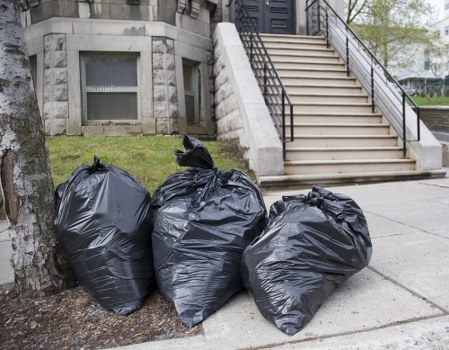 Emergency procedures are established for events such as fire, accidental injury or hazardous material discovery. First aid provision is maintained on site where possible and contactable emergency support is identified before work begins. Evacuation routes and assembly points are communicated to occupants and staff in multi-occupancy buildings. Regular drills and reviews of emergency response plans help keep readiness current for all waste management and clearance activities.
Safe handling and disposal of materials are core to reducing environmental and health risks. We operate under a policy of segregation: recyclable materials are separated from general waste and hazardous items (batteries, solvents, asbestos suspects) are isolated and managed through authorised carriers. Contractors must follow safe disposal procedures to ensure that the waste removal area does not become a source of contamination or nuisance. Site cleanliness and housekeeping standards are enforced to prevent slips, trips and falls.
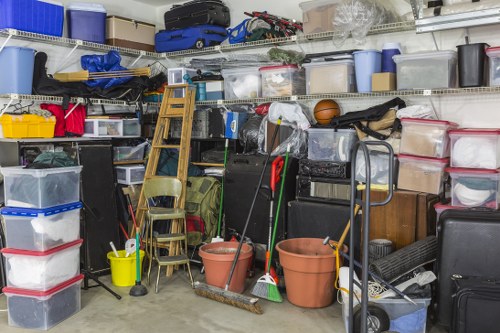 Key controls used across the rubbish collection and flat clearance service area include:
- Pre-job risk assessment and site inspection;
- Appropriate PPE for the task and environment;
- Safe manual handling techniques and use of mechanical aids where feasible;
- Clear segregation and labelling of waste streams to prevent cross-contamination;
- Licensed disposal routes for hazardous items and sharps.
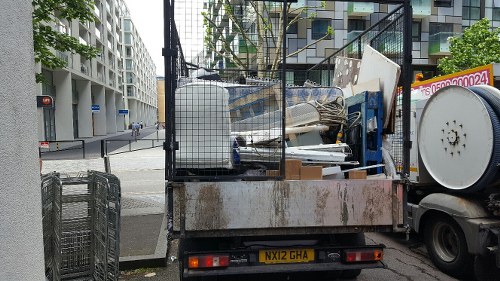 Monitoring, incident reporting and continuous improvement are essential elements of this policy. All incidents, near misses and unsafe conditions must be reported promptly and investigated to identify root causes and preventive actions. Performance is monitored using health and safety indicators such as training completion rates, incident frequency and corrective action closure times. Regular audits and management reviews ensure the policy remains effective and aligned with legal obligations and industry best practice.
We are committed to working cooperatively with building managers, residents and third-party contractors to coordinate clearances in a manner that minimises disruption while preserving safety. This includes planning for safe access, timing of removals to reduce footfall, and communicating any temporary changes to building egress. While the policy avoids local legal detail, it is consistent with applicable safety obligations and expectations for professional rubbish clearance providers operating in a defined service territory.
In summary, this Health & Safety Policy for flat clearance operations emphasises prevention, training, and clear accountability. By maintaining robust procedures for risk assessment, emergency preparedness, safe waste handling and continuous monitoring, the company ensures that its flat clearance and waste removal services are delivered responsibly across the rubbish company service area. All employees and contractors must familiarise themselves with this policy and contribute to a safe working environment.